Table of Contents

Rain is gold! In Western Washington, water is rarely scarce. The region’s temperate rainforest climate ensures long, drizzly winters and frequent spring showers. Yet despite the abundance, many households and gardens operate as though water were limited to the tap. With climate change constantly shifting our weather patterns, the Pacific Northwest could be facing future water shortages that could become permanent.
Here’s the thing: rain is gold in terms of its value to your garden, your property, and the broader ecosystem. Capturing it efficiently can reduce your water bills, increase plant health, and decrease stormwater runoff that overwhelms local streams and drainage systems.
Rain is Gold: Rainwater Harvesting
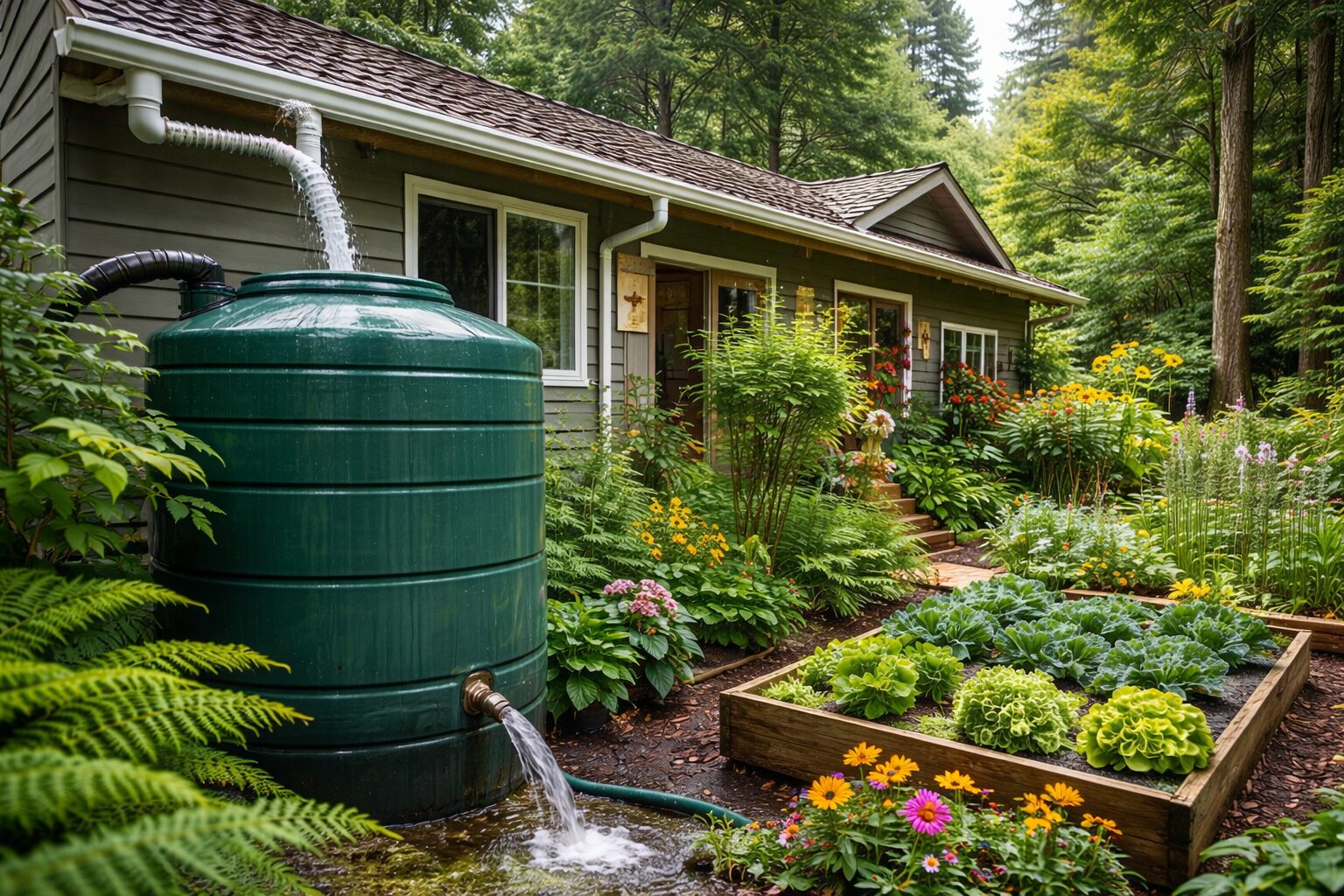
The principle behind rainwater harvesting is deceptively simple: Rain is gold when you can collect precipitation before it hits the ground, storing it safely, and use it when needed. The most common system in Western Washington starts with the roof. Roofs are natural catchments, and gutters act as simple channels to direct water into storage tanks or cisterns. From there, gravity or pumps deliver the water to gardens, orchards, or even household uses with proper filtration.
The first step is assessing your potential. Measure your roof’s square footage and calculate the annual rainfall for your area. For example, Seattle averages around 37 inches of rain per year, while areas west of the Cascades, like Forks or Port Townsend, often see more than 80 inches annually. Multiply your roof area by the rainfall and a conversion factor to estimate the gallons of water that could be collected. For example, a modest 1,500-square-foot roof in Seattle could capture roughly 27,000 gallons per year, a staggering figure if you consider that much of that rain is currently disappearing down storm drains.
Gutters and Downspouts
Next come the gutters and downspouts. In a region where rain is frequent, these must be robust, free of leaks, and capable of handling sudden downpours. Leaf screens and first-flush diverters are essential for keeping debris and initial contaminants out of storage tanks. The first flush of a rainstorm tends to carry the dirtiest water from the roof, dust, pollen, and bird droppings, and diverting it ensures cleaner water enters your system.
Rainwater Storage
Storage is the heart of any rainwater harvesting system. Tanks or cisterns can be above ground or buried, made from plastic, metal, or even concrete. In Western Washington, protecting water from algae growth is important because the region’s shorter, cloudier summers limit natural UV exposure but allow algae to flourish if water sits too long in sunlight. Dark-colored tanks or shaded installations reduce this risk. Safety also matters: tanks must be secure to prevent accidents, mosquito breeding, and contamination.
Rainwater Distribution
Distribution is the final consideration. For gardens, gravity-fed drip irrigation for rain is efficient and reduces water waste. Pumps can move water to higher areas or into pressure systems for household use, but filtration and, in some cases, UV treatment are necessary if water is used indoors. Even without indoor plumbing integration, using harvested water for landscape irrigation alone can offset significant portions of municipal water use.
Beyond practical benefits, rainwater harvesting has ecological advantages. By reducing runoff from impervious surfaces like roofs and driveways, these systems decrease erosion, protect salmon streams, and lessen the burden on stormwater infrastructure. In urban and suburban areas, redirecting rain into storage or permeable landscapes mimics natural hydrology, supporting both plants and wildlife.
Designing your system with scalability in mind is crucial. Start small if budget or space is limited, then expand as your needs grow. Modular tanks, multiple collection points, and flexible irrigation lines allow for incremental improvements without overhauling the entire system. And consider the aesthetics: rainwater systems can be integrated with raised beds, pergolas, or even artistic cistern designs to blend with the landscape rather than dominate it.
Balance is the Key
Finally, think in terms of seasons. Western Washington’s wet months fill tanks quickly, while drier summers make stored water invaluable. A well-designed system balances collection, storage, and usage across these cycles. Monitoring levels, inspecting gutters regularly, and maintaining pumps or filters ensure that the water you capture remains available when it’s most needed.
In a region famous for gray skies, the idea that rain is gold may sound counterintuitive. Yet for those who invest in thoughtful roofline capture, that gold translates into thriving gardens, reduced utility bills, and a lighter ecological footprint. Every rooftop, every tank, and every drip of stored rainwater contributes to a more resilient, sustainable Cascadia. When winter storms come rolling over the Olympic Mountains or the Cascades, imagine turning every drop from nuisance to resource. It’s a small step, but one that pays in both literal and ecological dividends.
Like and Share!
Love Cascadia? So do we! Like, comment, and connect with your community—then catch all our videos on YouTube: https://www.youtube.com/@republicofcascadia
You can also subscribe to our monthly newsletter using the button below!