Table of Contents
Soft Secession Defined
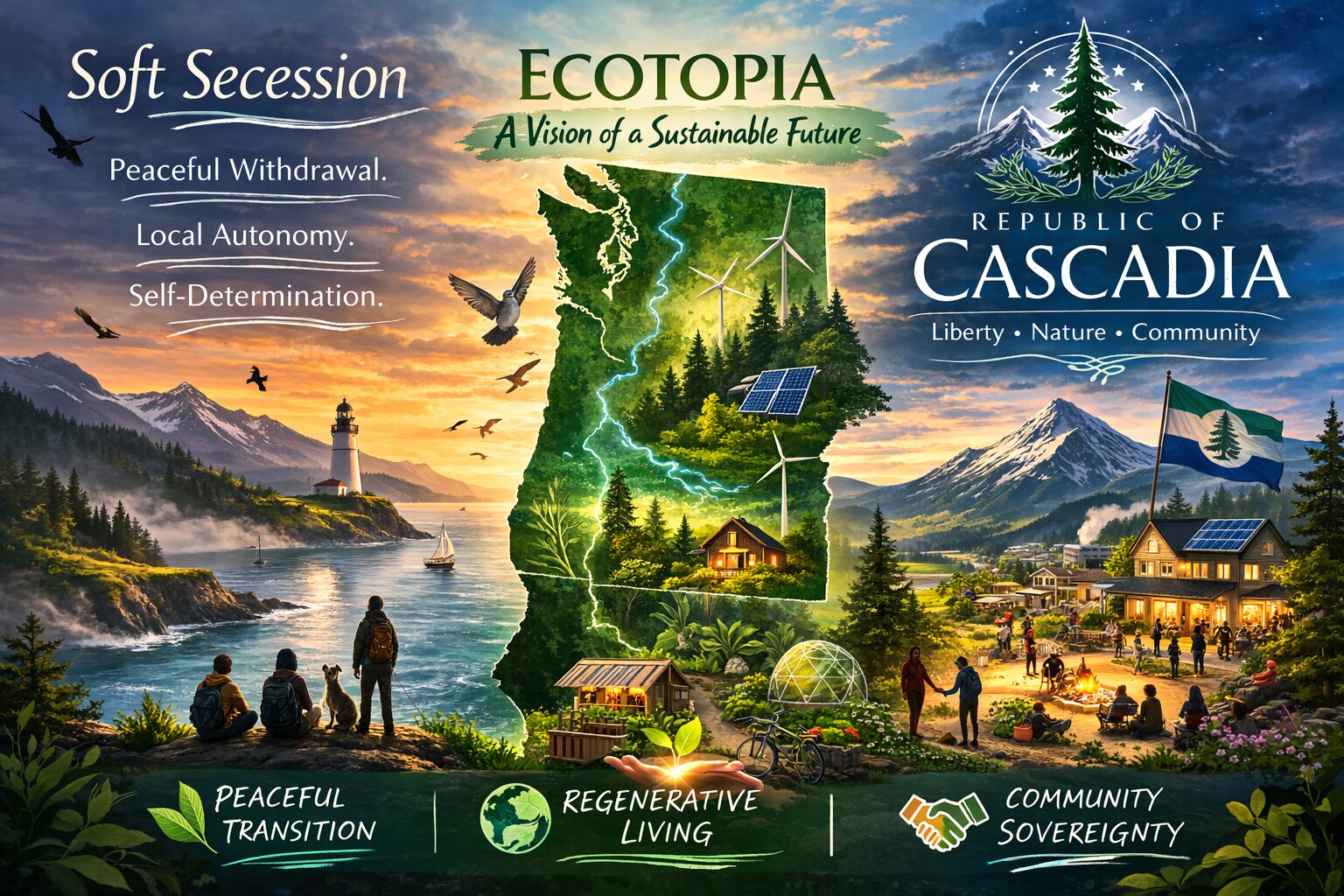
Soft secession is a concept in political and regional movements where a region seeks greater autonomy or independence gradually and peacefully, without an immediate, full political break from a larger state. Unlike “hard” secession, which demands instant legal and constitutional separation, soft secession focuses on:
- Building regional identity – emphasizing local culture, shared values, and community governance.
- Expanding autonomous institutions – creating independent economic, environmental, or political systems that operate within or alongside existing national frameworks.
- Gradual policy divergence – implementing laws, regulations, and infrastructure that reflect regional priorities rather than centralized mandates.
- Peaceful, incremental change – relying on consensus, public support, and democratic processes rather than unilateral declarations of independence.
In the context of Cascadia, soft secession might mean: stronger cross-border cooperation between British Columbia, Washington, Oregon, and Northern California; regionally focused environmental governance; local currency or trade initiatives; and other steps that increase the bioregion’s self-determination without immediately leaving the United States or Canada.
It’s essentially about creating the practical and cultural foundations for independence over time, rather than demanding an overnight political divorce.
Ecotopia and Cascadia
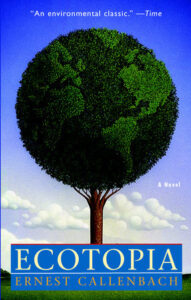
Ernest Callenbach’s 1975 work Ecotopia explores a fictional future in which the Republic of Cascadia became a reality in a country called Ecotopia that seceeded from the United States of America. Here’s a deep dive into the relationship between the Republic of Cascadia and the book Ecotopia exploring how a decades‑old ecological utopia helped shape regional imagination around autonomy, and what current data shows about support for soft secession across British Columbia, Washington, Oregon, and Northern California.
Soft secession isn’t about instant political independence. It’s about gradually building autonomous institutions, a stronger regional identity, and political momentum that could one day support greater self‑determination. In many ways, the story of Cascadia’s modern movement parallels a literary vision that long predated it: Ecotopia by Ernest Callenbach.
Published in 1975, Ecotopia imagined a future society formed when Northern California, Oregon, and Washington seceded from the United States to create a new nation built on sustainability, social equity, and ecological harmony. In this fictional world, citizens recycle almost everything, transportation is electric and human‑powered, and ecological principles guide every aspect of life.
While the book was written as speculative fiction, it captured a growing cultural and environmental consciousness in the Pacific region and became especially popular among readers in the Northwest. At least half of the book’s early sales were reported from the Pacific Northwest, a region already embracing environmental activism and bioregional thinking.
That isn’t a coincidence. The core concepts in Ecotopia, such as permaculture, renewable energy, reduced consumption, and community governance, resonate with many of the values driving contemporary Cascadian movements. Today’s Republic of Cascadia embraces ecological sustainability and community resilience precisely because people in the region increasingly see old political boundaries as less meaningful than shared environmental futures. Ecotopia didn’t invent those ideas, but it framed them in a way that highlighted how a region like ours could function on its own terms, with sustainability at its heart.
Ecotopia, Cascadia, and the Reality of Soft Secession
Now let’s look at current attitudes about autonomy and secession, both in hard and soft secession terms, across our bioregion. Direct polling on complete political independence (i.e., full secession) for Cascadia, specifically in Washington and Oregon, is sparse, but broader data on attitudes helps illuminate the context. In British Columbia, a 2020 poll found that 27 percent of residents supported British Columbia becoming an independent country, up from 17 percent in previous years. Among younger people aged 18 to 34, support for independence was even higher, at 37 percent. What’s more, support for joining with Washington and Oregon — a form of regional unity akin to Cascadia was particularly strong, with 66 percent of young British Columbians expressing enthusiasm.
That’s a striking indication that people in the northern part of the bioregion feel a strong affinity both for local autonomy and for connections with places like Seattle and Portland sentiments that align well with the idea of soft secession. The concept acknowledges regional identity and shared values without demanding immediate constitutional rupture.
In the United States more broadly, support for the idea of secession or autonomy is at one of its highest points in decades. National polls have found that around 37 percent of Americans say they support secession, and a large majority of about 68 percent say they are open to the idea of a state or region’s right to peacefully secede. Among political groups, support varies, but these numbers show a growing openness to political rearrangement and the legitimacy of regions choosing their own path.
Within the Pacific region (which includes Washington and Oregon) these attitudes reflect an underlying readiness for new political narratives. When people hear soft secession, they’re often thinking about expanding regional influence through cooperative policy frameworks, ecological autonomy, and resistance to distant federal control rather than outright political divorce overnight. It’s a spectrum, and many see soft secession as a democratic evolution rather than a radical break.
Ecotopia and Soft Secession
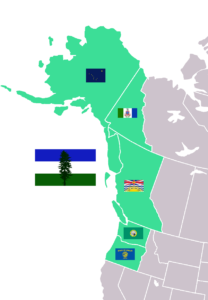
That’s where the relationship with Ecotopia becomes especially relevant. The book’s ecological vision anticipated not only environmental governance but also a regional consciousness grounded in place, natural resources, and community well‑being instead of centralized federal power. Today’s Cascadian movement builds on that framework by advocating real-world strategies that align with ecological governance, regional cooperation, and cultural identity rooted in the Pacific Northwest bioregion.
In other words, Ecotopia might have been fiction, but its ideas continue to shape how people think about autonomy, sustainability, and regional governance here in Cascadia. And as more people, especially younger generations, feel both a strong ecological identity and a growing dissatisfaction with distant and often unresponsive political control that doesn’t share our ideals, the idea of soft secession as a practical pathway to a more responsive and sustainable future gains traction.
The vision of the Republic of Cascadia, informed by ecological principles and increasingly reflected in public sentiment, echoes Ecotopia’s enduring legacy: a belief that people can organize based on shared environmental values, cultural affinity, and democratic self‑determination instead of inherited political constructs.
Like and Share!
Love Cascadia? So do we! Like, comment, and connect with your community—then catch all our videos on YouTube: https://www.youtube.com/@republicofcascadia
You can also subscribe to our monthly newsletter using the button below!