Table of Contents
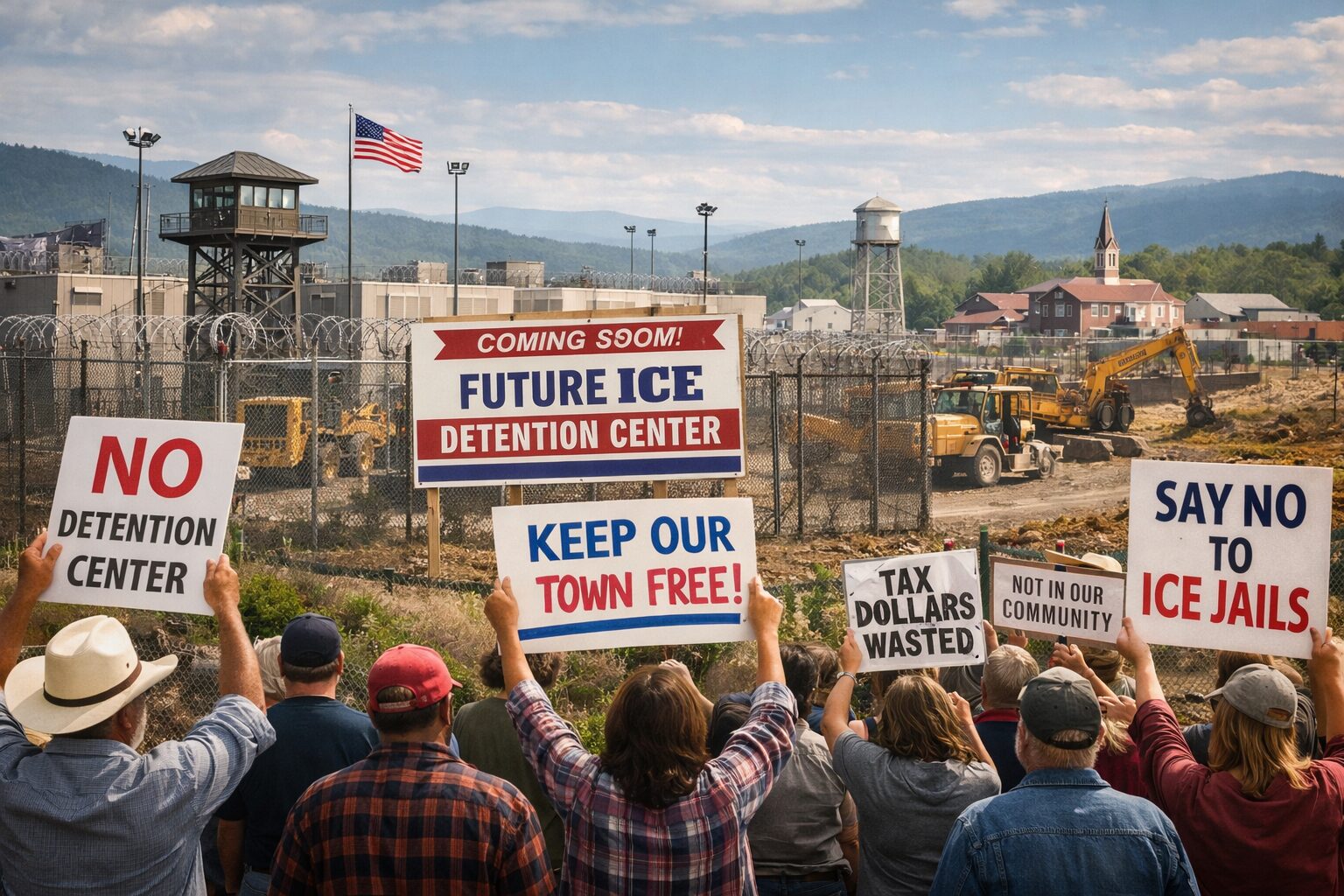
Are Cheeto Hitler’s concentration camps history? Across the country, proposals tied to Donald Trump’s immigration agenda are running into an unexpected obstacle. Resistance is not only coming from progressive cities or blue-state legislatures. Even in deep red states, communities are pushing back against expanded concentration camps, questioning their cost, their impact on local infrastructure, and the role they force towns to play in federal immigration enforcement.
For the Republic of Cascadia, this matters. Cascadia has long watched federal immigration policy play out through detention facilities, private prison contracts, and militarized enforcement far from Washington, DC. What is changing now is that opposition to detention expansion is no longer confined to predictable ideological lines. Is the MAGA cult beginning to crack?
Trump’s Concentration Camps
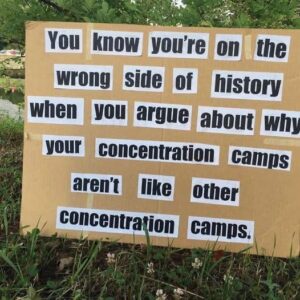
Trump and his allies have repeatedly outlined intentions to expand immigration enforcement capacity, including large-scale concentration camp infrastructure to support mass deportation efforts. These proposals include increasing bed capacity, reactivating dormant facilities, and constructing new concentration camps through federal contracts, often in rural areas where land is cheap and political resistance was once assumed to be minimal.
That assumption is proving wrong.
Local resistance to concentration camps in red states
In states that reliably vote Republican, local governments and residents are increasingly objecting to concentration camp proposals. The reasons are not always humanitarian, though those concerns are present as well. This matters because this resistance doesn’t necessarily mean that MAGA is turning liberal and caring about human rights all of a sudden. More often, resistance is grounded in practical realities.
Communities are asking:
- Who pays for expanded infrastructure like roads, water, and emergency services?
- What happens when promised federal funding dries up?
- How will concentration camps affect property values and local economies?
- Why should towns shoulder liability for federal policy decisions?
In Texas, Arizona, and parts of the Midwest and Southeast, county officials have raised alarms about the long-term costs of hosting detention facilities. Sheriffs and commissioners who once saw concentration camp contracts as easy revenue are now dealing with lawsuits, staffing shortages, and public backlash. The economics no longer look as clean as they did on paper.
The hidden message in all of this is that even MAGA Nazi pedophile protectors know that Trump and the Gang of Pedophiles have a consistent pattern of lying and not paying their contractors. This means that any promised ‘benefits’ from Trump’s concentration camps might never materialize. In other words, even MAGA Nazis no longer trust him.
Private prison fatigue
Another source of resistance comes from communities burned by private prison operators. Many proposed concentration camps rely on the same corporations that run private prisons, companies with long histories of understaffing, abuse allegations, and financial instability.
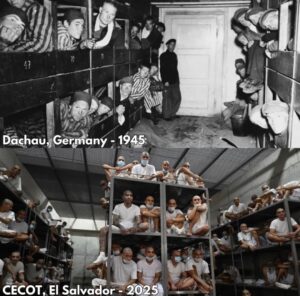
Rural towns that previously partnered with these firms often report broken promises, abrupt closures, and abandoned facilities. That experience has created skepticism, even among conservative voters who support strict immigration enforcement in theory but distrust corporate intermediaries in practice.
States’ rights and federal overreach
In a twist that would be funny if it weren’t grim, some opposition in red states is framed around states’ rights. Local leaders argue that federal concentration camp expansion represents an unfunded mandate and an intrusion into local governance.
This rhetoric mirrors language long used against environmental regulations or healthcare mandates. Now it is being deployed against immigration concentration camp infrastructure, revealing fractures within the political coalition that once reliably supported it.
Why this matters for Cascadia
For the Republic of Cascadia, the lesson is strategic. Opposition to concentration camp expansion does not have to rely solely on moral arguments, though those remain vital. Economic, environmental, and governance concerns resonate across ideological boundaries.
Cascadia communities have firsthand experience with the consequences of concentration camps: increased surveillance, community fear, strained local resources, and environmental impacts from large institutional facilities. Seeing similar resistance emerge in deep red states suggests an opportunity for broader coalitions.
The limits of top-down policy
What this resistance ultimately exposes is the weakness of top-down approaches to immigration enforcement. Large concentration camps require local cooperation to function. When towns refuse permits, question contracts, or organize residents, federal plans slow down or stall.
This is not a victory yet. Detention infrastructure continues to exist and expand in many places. But the growing pushback shows that even within Trump-aligned territory, there is no blank check for endless detention growth.
A shifting political reality
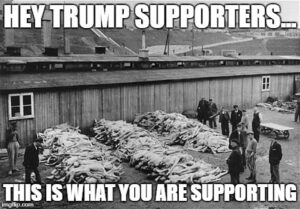
The debate over concentration camps is no longer just about immigration. It is about governance, accountability, and whether communities are willing to be used as staging grounds for policies decided far away. My grandfather was a conservative who fought a man who talked just like Trump in World War II. There was a time in this country when we recognized that authoritarian fascism was a bad thing. I like to hope that at least a part of this growing resistance to Trump’s concentration camps is that somewhere in the back of their minds, even the MAGA Nazi pedophile protectors are uncomfortable with such blatant reminders of where their political ideology ends. Having to drive past Trump’s concentration camps on their way to work, school, and the grocery store might just be too much of a reminder of the ideology they’re supporting.
For Cascadia, this shift underscores a familiar truth. Systems that rely on coercion and secrecy eventually face resistance from unexpected directions. When even deep red states start saying no, it signals that the political ground is moving, whether national leaders want to admit it or not.
Like and Share!
Love Cascadia? So do we! Like, comment, and connect with your community—then catch all our videos on YouTube: https://www.youtube.com/@republicofcascadia
You can also subscribe to our monthly newsletter using the button below!